
Boston Marathon bombing investigation reveals security state’s hypocrisy toward photographers (shooters, know your rights)
 It’s become a little too common a story:
- police thugs beating the hell out of a citizen (who may or may not have done anything)
- citizen with camera takes pictures or video of police abuse
- police arrest photographer
- because apparently it’s illegal to record police brutality
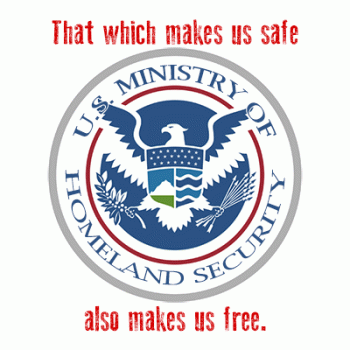
The new trend is to make photographing the police illegal, although they will also arrest you for “obstructing law enforcement” – something you can apparently do from a distance. The Ministry of Homeland Security even wants us to view public displays of photography as potential terrorist activity.
But in Boston last week, the authorities were singing a very different tune, begging citizens to review their stills and video from the site of the Marathon bombings for clues to the identity of the attackers. How convenient. And utterly hypocritical. Carlos Miller over at PhotographyIsNotACrime is dead on the money.
After more than a decade of profiling citizens with cameras as potential terrorists, law enforcement officials are now hoping these same citizens with cameras will help them nab the culprits behind the Boston Marathon terrorist explosions.
Adding to the hypocrisy is that these same authorities will most likely start clamping down on citizens with cameras more than ever once the smoke clears and we once again become a nation of paranoids willing to give up our freedoms in exchange for some type of perceived security.
After all, that is exactly how it played out in the years after the 9/11 terrorist attacks where it became impossible to photograph buildings, trains or airplanes without drawing the suspicion of authorities as potential terrorists.
In fact, the Department of Homeland Security along with the FBI routinely advises that photography in public must be treated as suspicious activity – even after a federal lawsuit forced DHS to acknowledge there is nothing illegal about photographing federal buildings.
 I have friends who have been hassled by the police and private security for engaging in perfectly legal activity, and I even had a rent-a-cop try to chase me away from a parking deck once even though it wasn’t the subject of my shooting. Since the authorities are unacquainted with the Constitution and the law, it’s up to us to help them.
So, if you’re a shooter, read this from the ACLU. In fact, print out a copy and stick it in your camera bag. While we’re at it, here’s a nicely constructed one-pager called The Photographer’s Right from Bert Krages, a nationally recognized attorney and photographers’ advocate. If you’re confronted by police or security, be polite, but feel free to assert your basic Constitutional rights.
Thanks to Lisa Wright for pointing me at this story and to Stuart O’Steen for the Photographer’s Right link.
 lullaby pit