
Why Does the U.S. Need a New Constitution?

We’re broken. We can be fixed. We can be better.
So much has been written about Donald Trump’s illegitimacy and all the ways in which he has managed to corrupt our system.
Let’s be clear about some things:
- Trump won two elections according to the rules of the system. In 2016 he lost the popular vote but won the Electoral College. In 2024 he won both.
- He has governed according to the rules, either with the support of a duly elected legislature or through perfectly legal executive orders.
- He has been backed by legally appointed judges.
- When he has ignored apparently lawful mandates, no meaningful official action has been taken against him.
- Over two administrations, he has been supported—reluctantly, perhaps, but still supported—by the opposition Democratic Party. Examples include:
- Democratic leadership accepted the certification of Trump’s 2016 election under existing constitutional procedures, despite credible evidence of foreign interference, prioritizing institutional continuity over systemic challenge.
- During first-term impeachment proceedings, Democrats operated within Senate rules that guaranteed limited evidence and foreclosed meaningful fact-finding, validating a constitutional mechanism stripped of its intended checking function.
- Democratic majorities repeatedly approved must-pass budgets and continuing resolutions that funded Trump-era policies, reinforcing executive priorities under the banner of “fiscal responsibility” and governmental stability.
- Democratic leaders consistently deferred to Department of Justice independence, even under unprecedented threats to constitutional order, accepting delays that insulated executive misconduct from timely accountability.
- When Trump officials ignored lawful subpoenas, Democratic leadership relied on protracted civil litigation rather than inherent contempt or institutional enforcement, signaling that congressional oversight was negotiable rather than compulsory.
- Despite recognizing the role of Trump-appointed courts in expanding executive immunity and weakening oversight, Democrats declined to pursue meaningful judicial or constitutional reform when politically positioned to do so.
- In repeated shutdown and debt-ceiling crises, Democrats accepted asymmetric concessions to avoid economic disruption, reinforcing a precedent in which constitutional brinkmanship is rewarded and governance is held hostage without consequence.
- Democratic leadership has actively resisted internal movements seeking structural reform, suppressing or isolating left-wing challenges to entrenched norms in order to preserve institutional continuity and donor-aligned governance.
- Not one shot was fired.
Trump may have twisted and contorted the system, but what he has mainly twisted and contorted is the public’s misconceptions about it.
This is hard to hear, and many people will howl in protest. Yet the uncomfortable truth is this: he did not violate our system—he exploited it.
Whatever the details, Donald Trump and the Democratic Party leaders aren’t the disease. They’re symptoms.
Here are brief overviews of a few major constitutional vulnerabilities.
Founding Motives and Constitutional Design
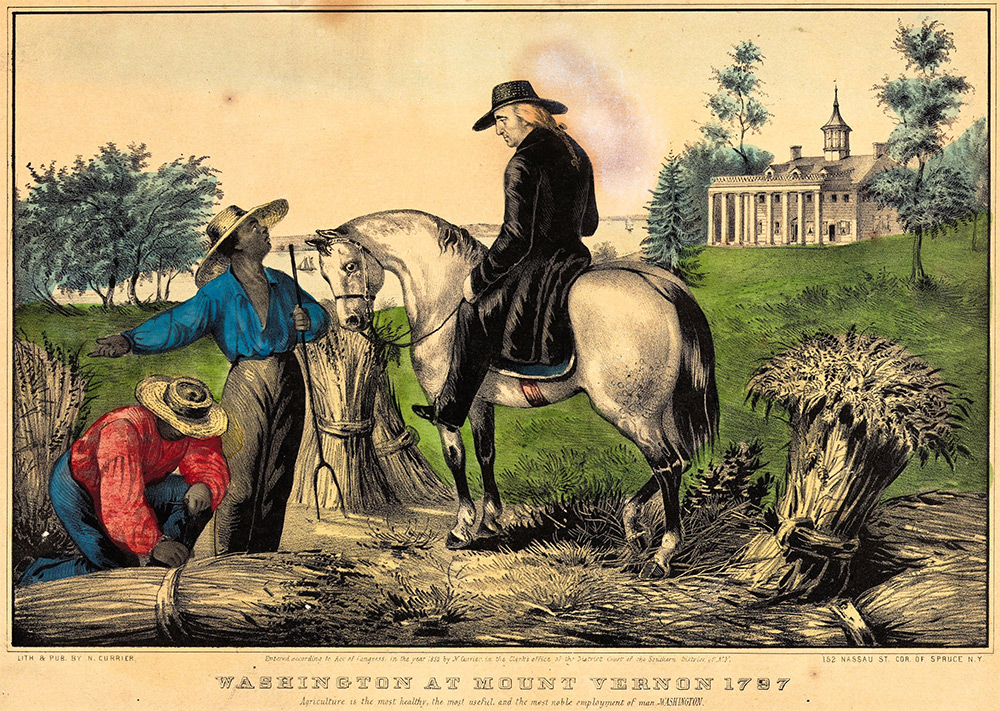
The United States constitutional system was constructed by an elite class of wealthy, property-owning men seeking independence from imperial rule while preserving their political-economic control and perch atop the social hierarchy. The constitution they wrote and ratified prioritized stability, insulating political power from popular pressure through layers of veto mechanisms. It excluded working men and all women from participation and allowed for the enslavement of millions.
This wasn’t an oversight. It was a deliberate design choice, rooted in fear of democracy and its perceived threat to property and order. The result was a system that embedded inequality at its foundation and continues to resist democratic accountability.
Electoral Malapportionment and Minority Rule
The U.S. system preserves order and privilege via entrenched minority rule mechanisms. Through the Electoral College and a severely malapportioned Senate (Wyoming gets one senator per ~290,000 people while California gets one per ~19,500,000), for example, political power is routinely exercised by coalitions that distort democratic legitimacy.
These structures don’t merely skew outcomes; they incentivize obstruction, polarization, and rule by veto, allowing entrenched minorities to block democratic reform while claiming procedural legitimacy.
Party Gatekeeping and Ballot Access
The nation’s two-party cartel sustains itself through a host of anti-democratic barriers, including restrictive ballot access laws, party-controlled primaries, debate exclusions, and a campaign finance system that concentrates political viability in candidates backed by wealthy donors and institutional funding networks.
Because only the top vote-getter wins, voters routinely confront “lesser-of-two-evils” choices between two dominant parties, even when neither represents them. Smaller parties and movements, despite reflecting the views of substantial blocs of voters, are denied any practical path to visibility, resources, or representation. Electoral rules are administered by the very parties they entrench, converting elections from mechanisms of accountability into instruments of gatekeeping.
Popular discontent is channeled into predefined political boundaries that afford protest without granting any real avenue for structural change.
Judicial Review Without Democratic Check
Judicial review in the United States operates without effective democratic constraint. Lifetime appointments, expansive jurisdiction, and the absence of meaningful override mechanisms have elevated the judiciary from constitutional interpreter to final authority, even in the face of documented conflicts of interest, undisclosed financial entanglements, and overt partisan alignment.
This arrangement allows an unaccountable minority to dictate sweeping policy outcomes, insulating structural power from democratic correction while maintaining the appearance of constitutional order.
In Sum
Things fall apart, Yeats said, and no system so far devised has indefinitely forestalled the rot of human corruptibility. Perhaps the best we can do is acknowledge at the outset that humanity has no greater enemy than itself. I’ve tried to do this, as best I can, in the Freedom & Prosperity Framework.
It’s certainly lacking. At the same time, I feel like it’s significantly better than the system the United States has lived with for 250 years.
Perhaps that’s enough to get a conversation started.
 lullaby pit