Everywhere Science Goes, Science Fiction Got There First
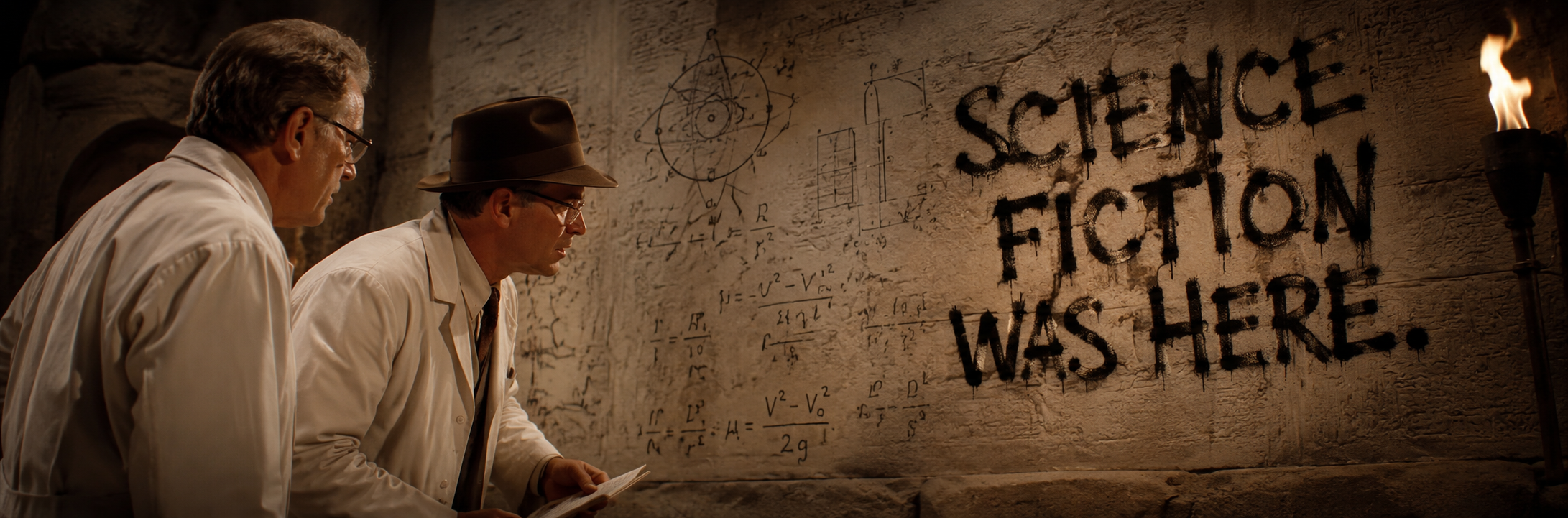
Science Fiction really does predict the future
Science fiction is really about the present. – William Gibson
Long before we had cell phones, Kirk was talking to Scotty on a what looked a lot like a flip-phone, and the distances these conversations often covered hinted at some sort of hellacious mobile hotspot tech we haven’t begun to get our heads around yet.
Jules Verne got to the moon more than a century before Neil Armstrong, Buzz Aldrin, and Michael Collins. New nanobot tech is perhaps only a few years away from what Neal Stephenson envisioned in The Diamond Age. Emerging virtual reality (VR) in entertainment and training is gaining on the holodeck. 3D printing is closing in on ST:TNG replicators and maybe, once artificial intelligence (AI) and bioengineering advance a bit more, the prophetic final scene in William Gibson’s Idoru, where a digital construct attains full, physical existence, will become a reality.
Okay, but so what? Neanderthals probably wondered what it was like on the moon. And creation myths are at the foundation of every culture in history. It’s easy to imagine.
True, but SF is often a direct inspiration for scientists and technologists.
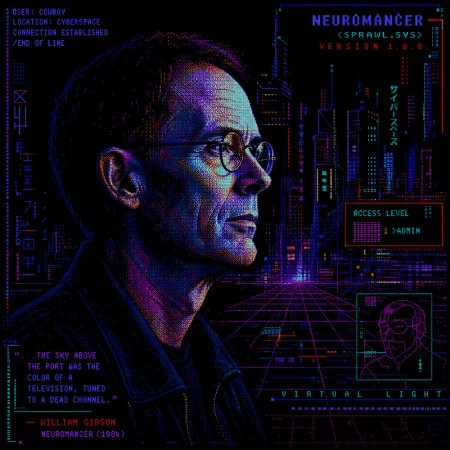 Cyberspace
Gibson’s debut novel, Neuromancer – arguably the most significant thought leadership document of the last 50 years – is perhaps the definitive case. Gibson coined the term “cyberspace,” and the spatial metaphor has dominated Internet development ever since. Web resources are “sites,” and we “go to” them, for instance. Information highways. The cloud. Online libraries. Discussion forums.
And for those who go back far enough, you might remember Mitch Kapor (founder of the Electronic Frontier Foundation) and former VP Al Gore comparing it to the agora (p66), the ancient Greek marketplace.
Amazing how much 21st century digital reality is influenced by one man’s imagination. The internet is still less visually three-dimensional than what Gibson depicted, but give VR a few more years, integrate it with AR and brain–computer interface, and you’re getting very close to his vision of cyberspace (to say nothing of Stephenson’s metaverse from Snow Crash).
You can’t do something you haven’t imagined
University researchers are studying the importance of SF in shaping scientific and technological development and the results are verifying what generations of sci-tech pros have known for a long time:
[Philipp Jordan at the University of Hawaii and his colleagues] found that researchers use science fiction in a variety of different ways. One is for theoretical design research. Another is to refer to and explore new forms of human-computer interaction, which researchers increasingly think is shaped by science fiction books and films. Then there is the study of human body modification, which is perhaps best explored via the medium of fiction.
“Sci-fi movies, shows or stories do provide an inspiration for the foremost and upcoming human-computer interaction challenges of our time, for example through the discussion of shape-changing interfaces, implantables, or digital afterlife ethics,” say Jordan and co.
Even more importantly, the pace of SF’s influence seems to be accelerating.
But the team’s most significant finding is that the role of science fiction seems to be changing. Researchers clearly mention it more often today than at any time in the past. And this data is likely to be just the tip of the iceberg. “We speculate that the explicit referral of sci-fi in human-computer interaction research represents a fraction of the actual inspiration and impact it has had,” they say.
Reporting, not speculating
A former co-worker really liked the post I did on IoT and healthcare for Cybersecurity Awareness Month, but asked if maybe it wasn’t just a little … “speculative,” I believe was the word he used.
Well, no, I said. First off, we’re not imagining the future, we’re describing today. Second, if we’re gazing into tomorrow, it isn’t far into tomorrow; the things we’re depicting aren’t just plausible, they’re already technically doable.
I mean, hey, if we can implant an insulin pump and let you control dosages with a smartphone app (we can and do), what’s so radical about the idea that someone can medjack your implanted, Bluetooth-connected defibrillator and demand ransom? A few years ago a senior threat intelligence analyst who was also a Type 1 diabetic stood before an audience at Black Hat USA in Las Vegas and hacked his own Medtronic Paradigm insulin pump in real-time, so this isn’t exactly – and I hope you’ll forgive me for this – science fiction.
A cautionary thought
It’s always fun to sign off with something aphoristic and TED-Talky. Something like, “in the age of implantable tech and AI co-pilots, science fiction isn’t fiction anymore. It’s threat modeling.”
Maybe “the future isn’t imagined, it’s deployed”? Or – I love this one: “If your threat models don’t read like science fiction, they’re out of date.”
The future arrives twice: first as fiction, then as engineering. The remarkable thing isn’t how often sf gets the details wrong (Neuromancer failed to predict mobile phones), but how often it gets the trajectory right. Wild fantasies become prototypes and demos and venture capital pitches all the time.
As Gibson said, the future is already here.
Technologies change and aesthetics change, but the economic, political, and cultural forces behind them remain disturbingly familiar. Understanding those forces is key to recognizing the future before it lands on you with both boots.
 lullaby pit